Fun Winter Memory Game with Free Printable Cards
Brrr, is it cold in here or is it just winter doing its thing?
If you’re stuck inside, staring at the snow, and your kids are bored – I’ve got you.
Say hello to our Winter Memory Game!
Cozy, frosty fun without the frostbite. Cute snowmen, cuddly penguins, steaming mugs of hot cocoa, snowflakes and all the chilly little things that make winter magical – turned into a super addictive matching game.
It’s simple to play, impossible not to love, and perfect for keeping little brains busy while you finally finish that coffee while it’s still hot. Whether you’re looking for a snow day saver, a classroom activity, or a family game night win, this one is about to be your new cold-weather favorite.
Ready to test your memory and bring the winter wonderland indoors? Let’s play!
| Quick Facts | |
|---|---|
| 👥 Players | 1+ |
| 🎂 Ages | 3+ |
| ⏱️ Play time | About 10-20 min |
| 🛠️ Setup time | Under 2 min after first prep |
| 🎃 Materials | Printed winter memory cards and scissors |
| 📍 Location | Indoor |
| 🎯 Difficulty | Easy |
| 🏷️ Also known as | Concentration, matching game |

What you need to play
- Printed winter memory cards from the PDFs
- Scissors to cut them apart
Recommended:
- Cardstock for printing. Thin printer paper can be see-through, and kids will spot the pictures from the back. Thicker paper keeps the game fair.
Optional but helpful:
- Laminator if you want to use the same set again and again
- Small zipper bag or bin to store the cards between rounds
Printing tip: if your printer offers a Fit to page option, use it so nothing gets cut off at the edges.


How to play winter memory match
Winter memory match is classic concentration. You are looking for matching pairs and trying to remember where you saw them.

- Shuffle the cards and lay them face down in a grid on a table or the floor.
- On your turn, flip two cards over so everyone at the table can see them.
- If the two cards match, keep the pair face up in front of you as your score pile and flip two more. You keep going until you miss.
- If they don’t match, flip both cards back face down in the exact same spots and your turn ends. The next player goes.
- Keep taking turns until all the pairs have been found.
- Count the piles. The player with the most pairs wins.
The whole trick is remembering where cards were. If you can picture the card you flipped two turns ago, you get the match.


Common mistakes to avoid
- Using thin paper. When pictures show through, you don’t have a memory game anymore. Use the cardstock noted above and the problem goes away.
- Moving missed cards to a new spot. If you slide them around, no one can use what they remembered. Put every miss right back where it was.
- Letting only the flipper see. Everyone needs to see both cards at the same time or the memory part doesn’t work. Lift them clearly and pause for a second.
- Starting with the whole deck for a little one. Start with fewer cards out and add more as they get confident. Fewer cards also make a shorter game.

Making it easier or harder by age
No reading is needed, so toddlers and preschoolers from about age 3 can play a simpler version. Older kids in kindergarten, first grade and beyond can play the full game.

To make it easier, use fewer cards on the table, play cooperatively where you all work together to find every pair, or have your child name the picture out loud each time they make a match.
To make it harder, lay the cards randomly instead of in neat rows. A scattered layout can be tougher to track. Some kids will surprise you and remember nearly every card once they get the hang of it.

The game can help kids practice memory, focus, visual recognition, turn-taking and patience.
I tried this with my three at the kitchen table. My 5-year-old loved the cooperative version where we rooted for each match together, my 8-year-old wanted to go head to head, and my 11-year-old asked me to scatter the cards the second time because the grid was too easy for him. That range is exactly why I keep the cards handy.

If you want the same game with pumpkins in the fall, we play the pumpkin memory game the same way.
More ways to play with the cards
Once kids know the classic rules, you can get a lot more play out of the same cards.

House rules and solo play
- Solo with a stopwatch. Lay the cards out like normal, flip two at a time, keep the matches, and try to beat your own best time.
- Twist card. Agree before you start that one card in the grid ends your turn if you flip it.
- Word backs. If you laminated the cards, write the picture name on the back with a dry-erase marker. Or write the first letter on one card of a pair and the whole word on the other. The words give hints from the back, so save word backs for reading practice, not a head-to-head game.

Other games with the same cards
- What is missing. Lay a row of cards face up, have everyone look, then have players close their eyes while you remove one. Can they remember what is gone? What is missing is a winter vocabulary twist on memory.
- Sort. If your set allows it, sort the pictures into groups and talk about why they go together.
- Three-card story. Pick three random cards and make up a silly winter story that uses all three.
- Hide and find hunt. Hide the cards around the room and find them to make pairs. For a December variation, try a Christmas scavenger hunt.
- Go Fish. If you print a few sets you can use them as a Go Fish deck and ask for matches instead of flipping.

Video examples
You can see the classic flip-two rules in action with a small set: two players flip two cards, a match means you go again, and you count the piles at the end to see who won. That video isn’t winter themed, but the turns are exactly the same.
The next video is a real-table refresher that shows cards face down in a grid or scattered randomly. Players flip two, keep matches face up as a score pile, and it adds the turn-ending twist card idea. This one isn’t winter themed either.
The third video is a winter vocabulary memory game with close-your-eyes and open-your-eyes rounds and winter words. It isn’t a card-flip game, but it’s a close cousin to the what is missing game above.

Winter memory in the classroom
I taught second through fourth grade for eight years, and memory cards came out in my room every winter.
I used them as a math center or a free-play station, and as a calm-down activity when the class needed a reset after coming in from recess. I put a small group at each table, gave every table its own set, taught the rules once to the whole class, and then let them run the game themselves. The key is the same as at home: everyone sees the flip, and missed cards go right back where they were.

For preschool small groups, the cooperative version is the one I’d pick. It keeps things friendly and lets younger kids practice without worrying about winning. My older elementary kids asked for the scattered layout once the grid got easy.

Winter cards aren’t tied to any one holiday, so the same set fits a mixed class from December through February. Laminated and bagged, each table’s set is ready to pull out again next week. If you need December ideas specifically, I use classroom Christmas games separate from this winter set.

When to pull out winter memory
Winter memory is my snow day and winter break backup, and it lives on our shelf through January and February as an indoor winter activity when we can’t get outside for long.

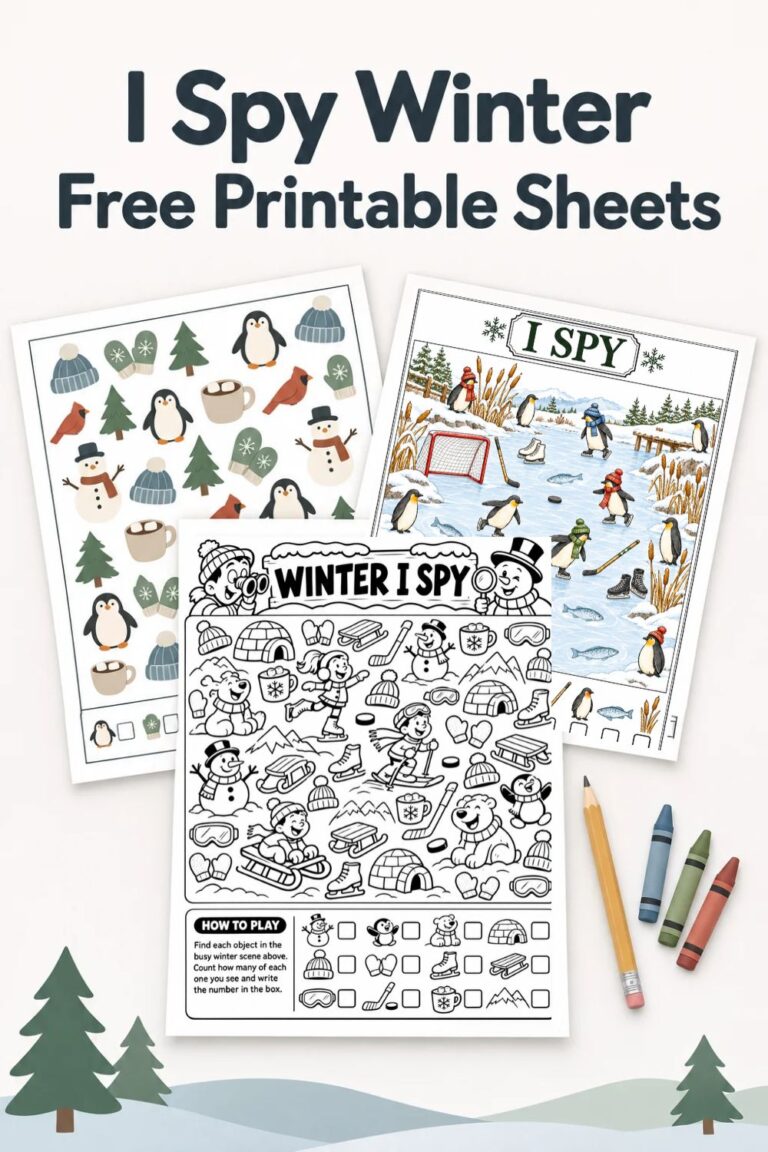
It pairs well with other winter printables. We often play it alongside winter I spy sheets, then winter bingo when cousins come over, and the roll a snowman dice game when they want dice instead of cards. In January we also pull out New Year bingo for the first week back.
Print a set, start with fewer cards on the table, and leave them out.