Winter Scavenger Hunt for Kids: How to Play Indoors and Outdoors (With Free Printables)
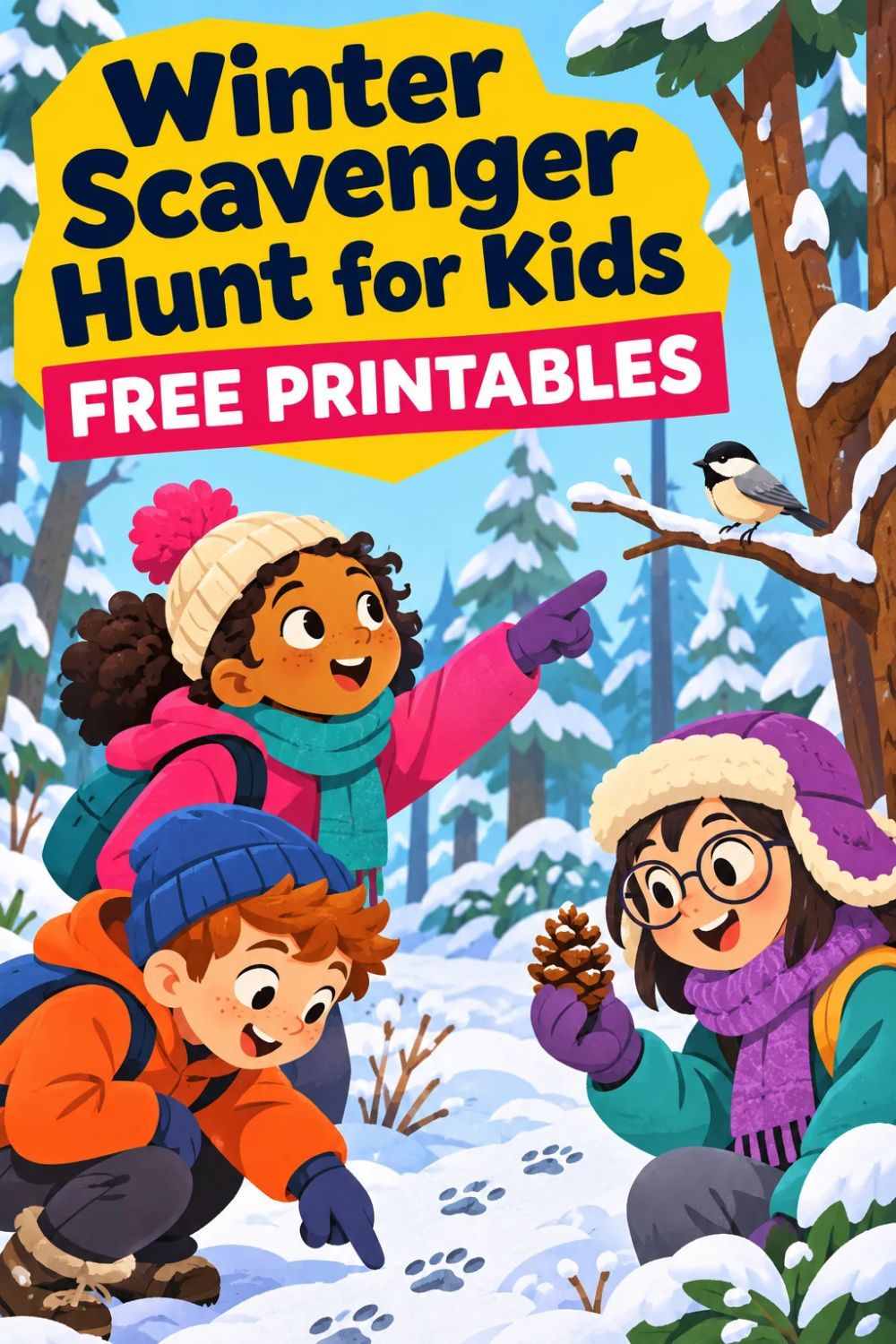
We’re going on a hunt!
Sure, winter might not have the flowers and sunshine of summer, but it has something way better: crunchy snow, icicles like nature’s chandeliers, animal tracks, steaming mugs of cocoa, and that magical fresh snow smell.
So zip up that puffy coat, grab your coziest beanie, and get ready to turn a chilly winter walk into a full-blown adventure. Our Winter Scavenger Hunt is perfect for kids, adults, and anyone who needs an excuse to get outside and actually enjoy the cold.
Ready to spot, search, and see winter in a whole new way? Let’s go!
| Quick Facts | |
|---|---|
| 👥 Players | Any number |
| 🎂 Ages | 3+ |
| ⏱️ Play time | 15-30 min |
| 🛠️ Setup time | Under 5 min |
| 🎃 Materials | Printable list or cards, pencil or crayon |
| 📍 Location | Indoor or outdoor |
| 🎯 Difficulty | Easy |
What you need and setup
- Required: the printable list or picture cards, plus a pencil or crayon for each child
- Optional: a clipboard, so kids can check things off while standing
- Optional: a sheet protector, plastic pouch or lamination if the list is going out into the snow
- Optional: a small basket and a timer for indoor rounds
- Optional for outside: spare mittens and a snack kids can eat with mittens on
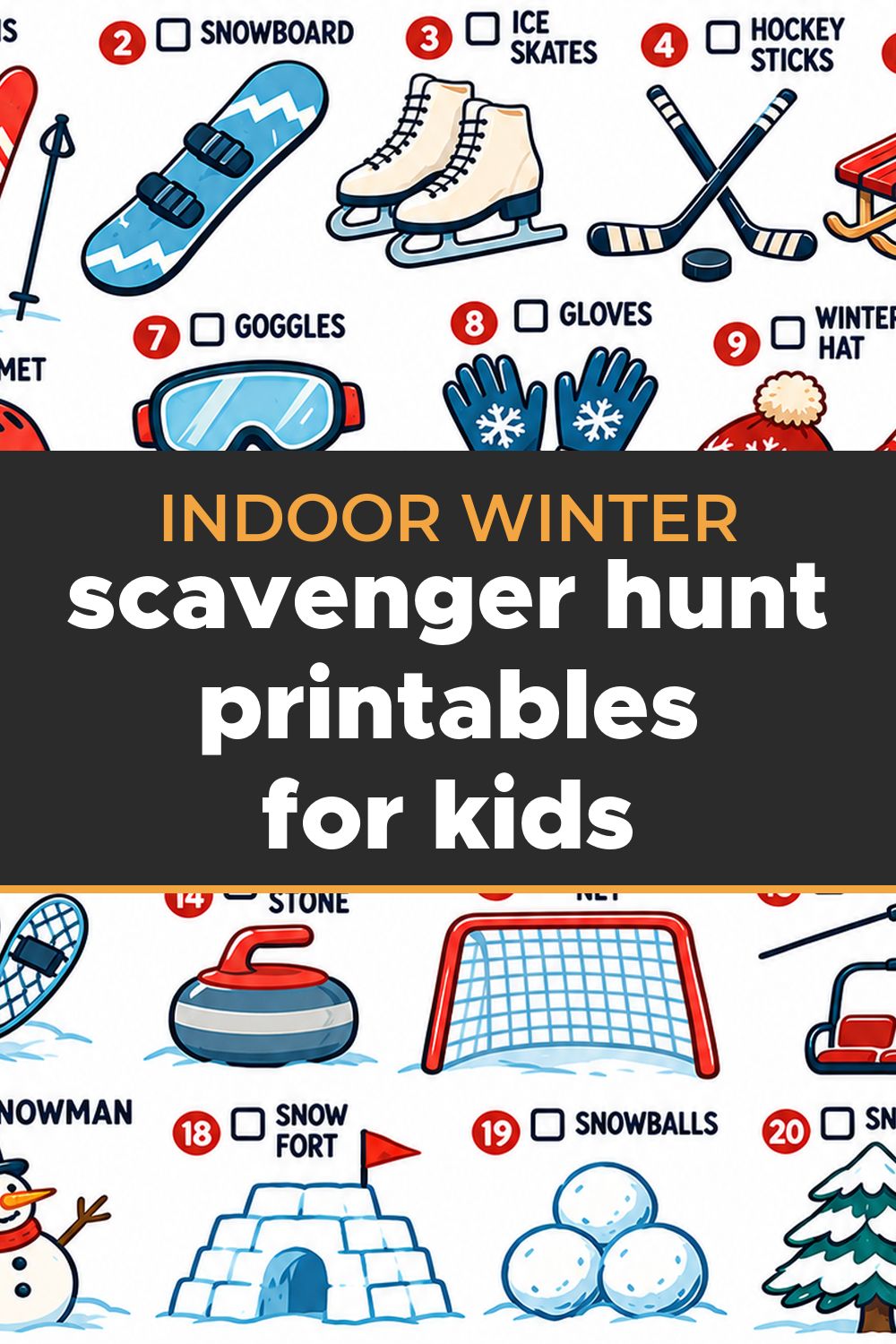
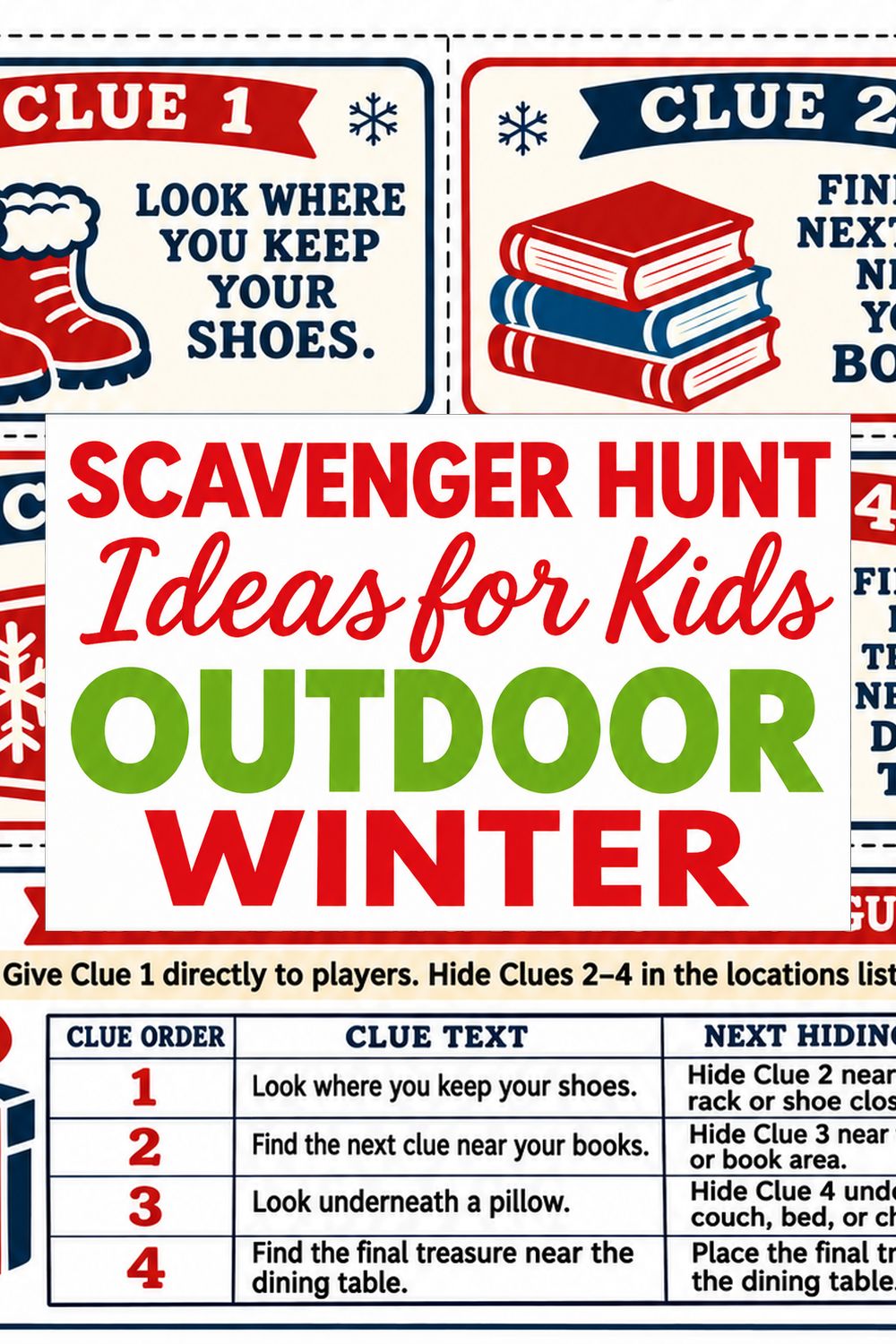
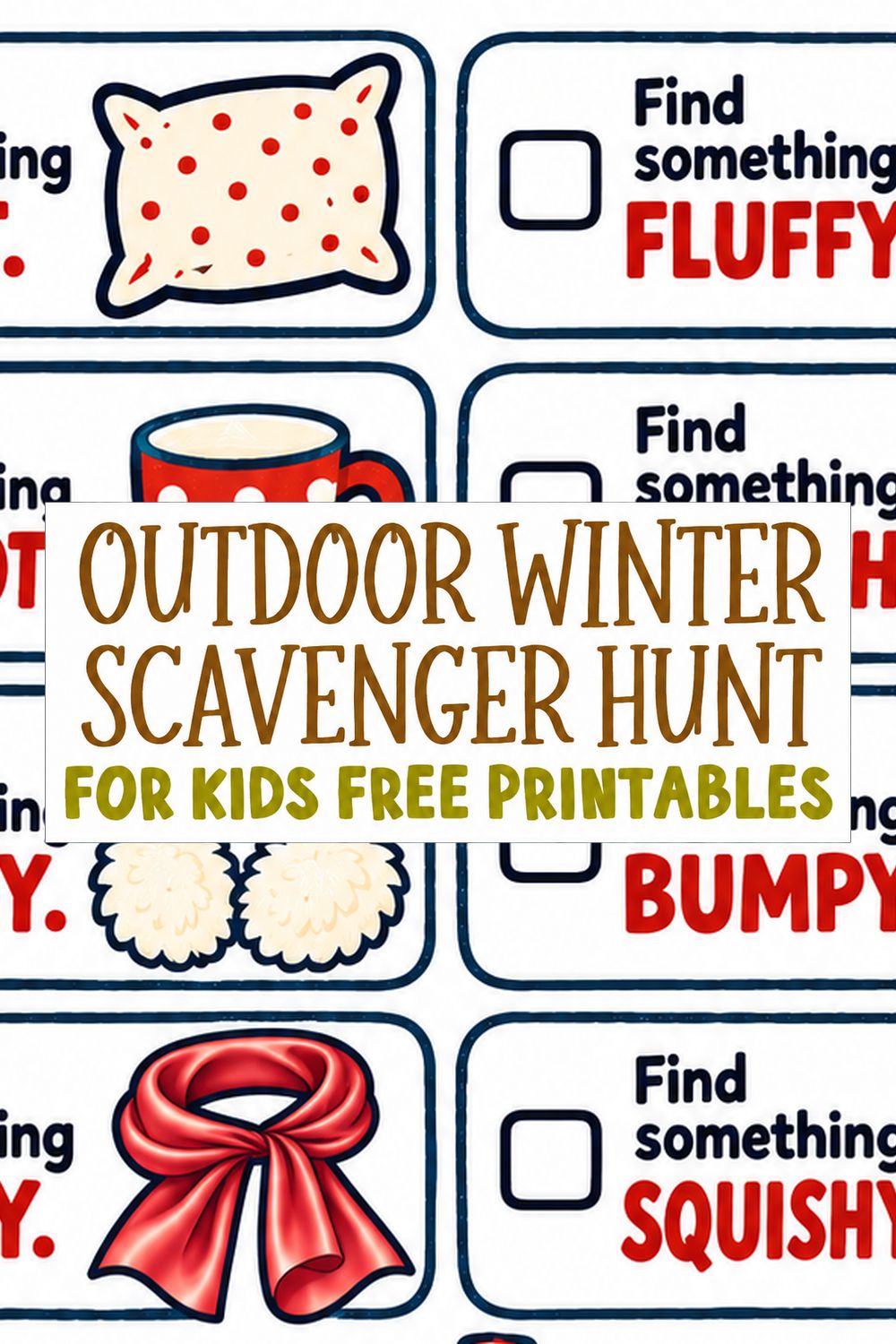
There are two ways to set it up. For a hide-and-find hunt, you hide the picture cards around the house, and kids find each one and check it off on their sheet. For a carry-the-list hunt, you hand out the list and kids look for things that are already there. Either one takes a few minutes to get ready.
How to play indoors
Indoors you have four ways to play, and they all use the same printables. Pick the one that fits your kids’ ages and how much energy they have right now. If they’re bouncing off the walls, go straight to the touch and return round.
Hidden picture card hunt
Pick this one when kids need to move around but nobody wants to leave the warm house.
- Print the picture cards and keep the checklist handy.
- Send the kids to one room to wait, and hide the cards around your main rooms.
- Give each child a checklist and a crayon.
- Say go. Kids hunt and check off each picture as they find it.
- When they think they have them all, count the cards together.
- Collect the cards and hide them again for another round.
Picture cards work well for kids who can’t read yet. They match what they see, so they don’t need to sound out any words.
Carry-the-list hunt
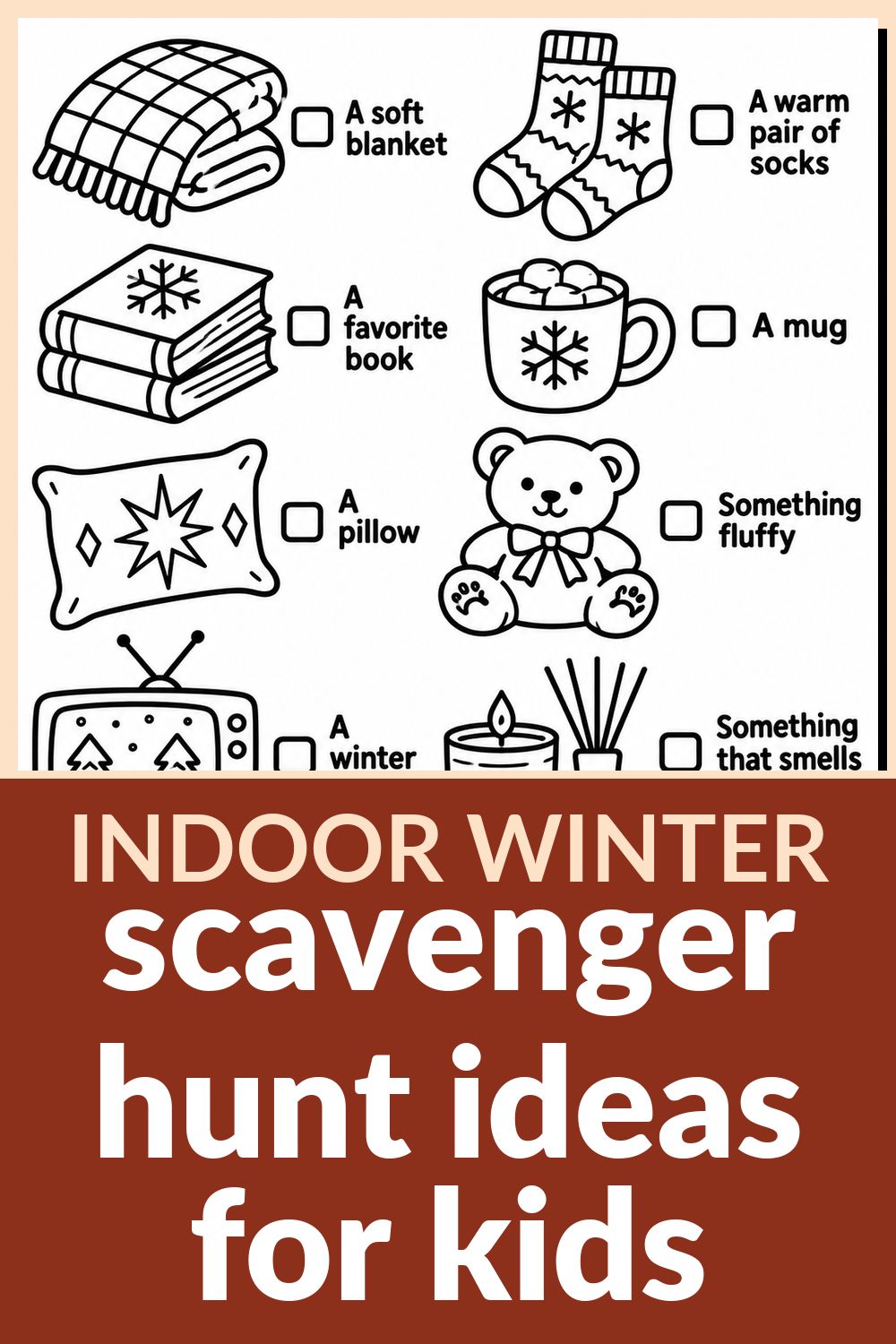
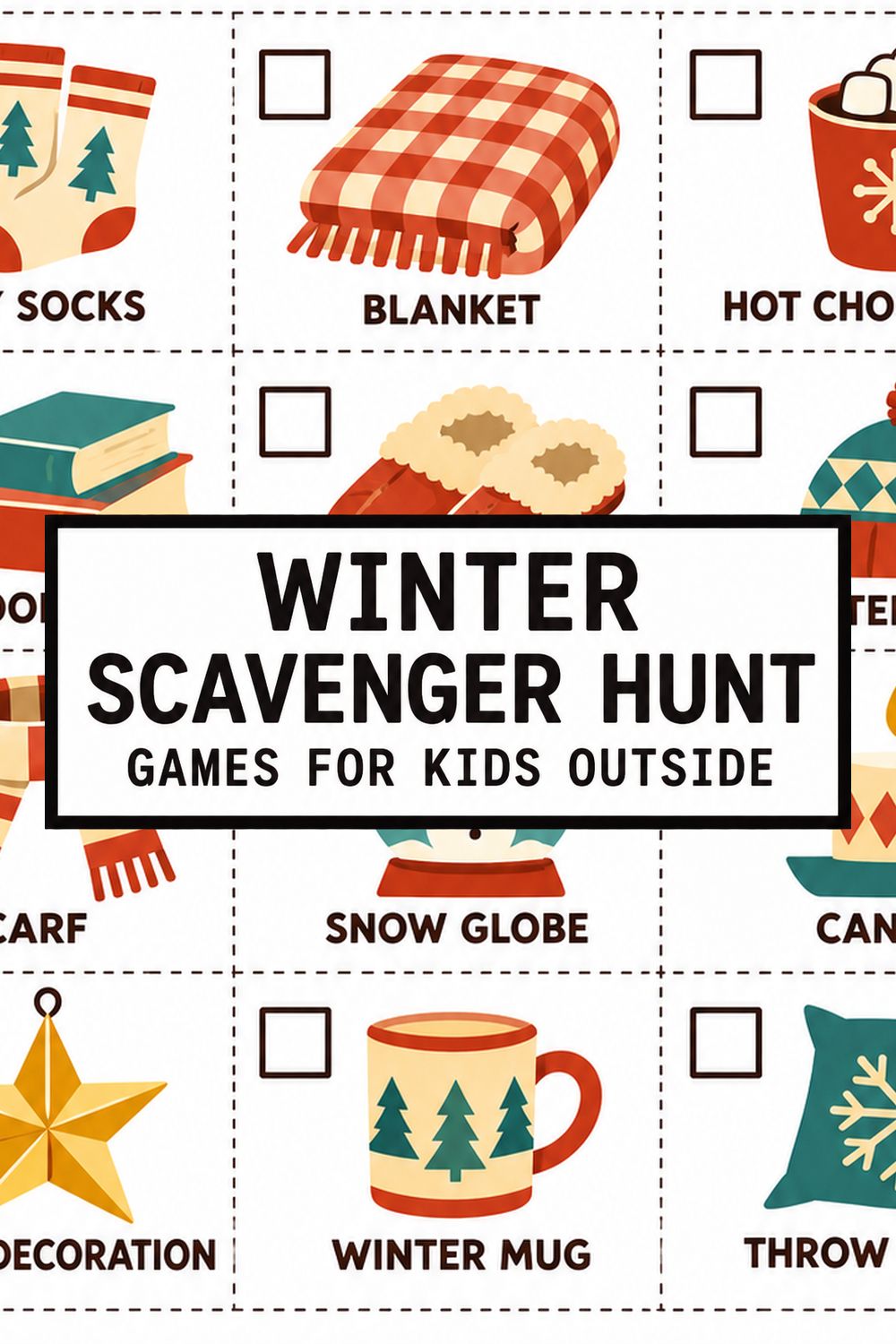
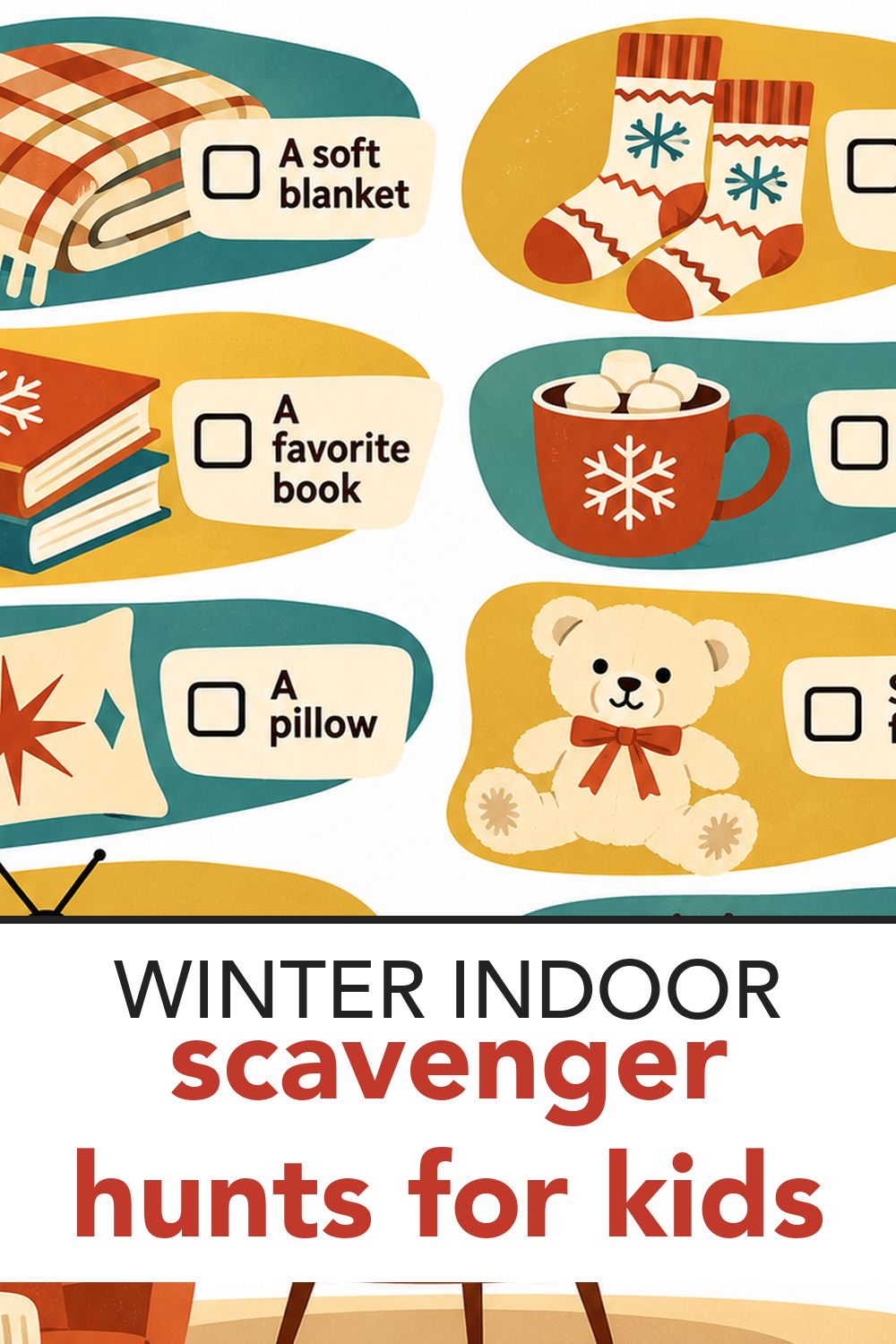
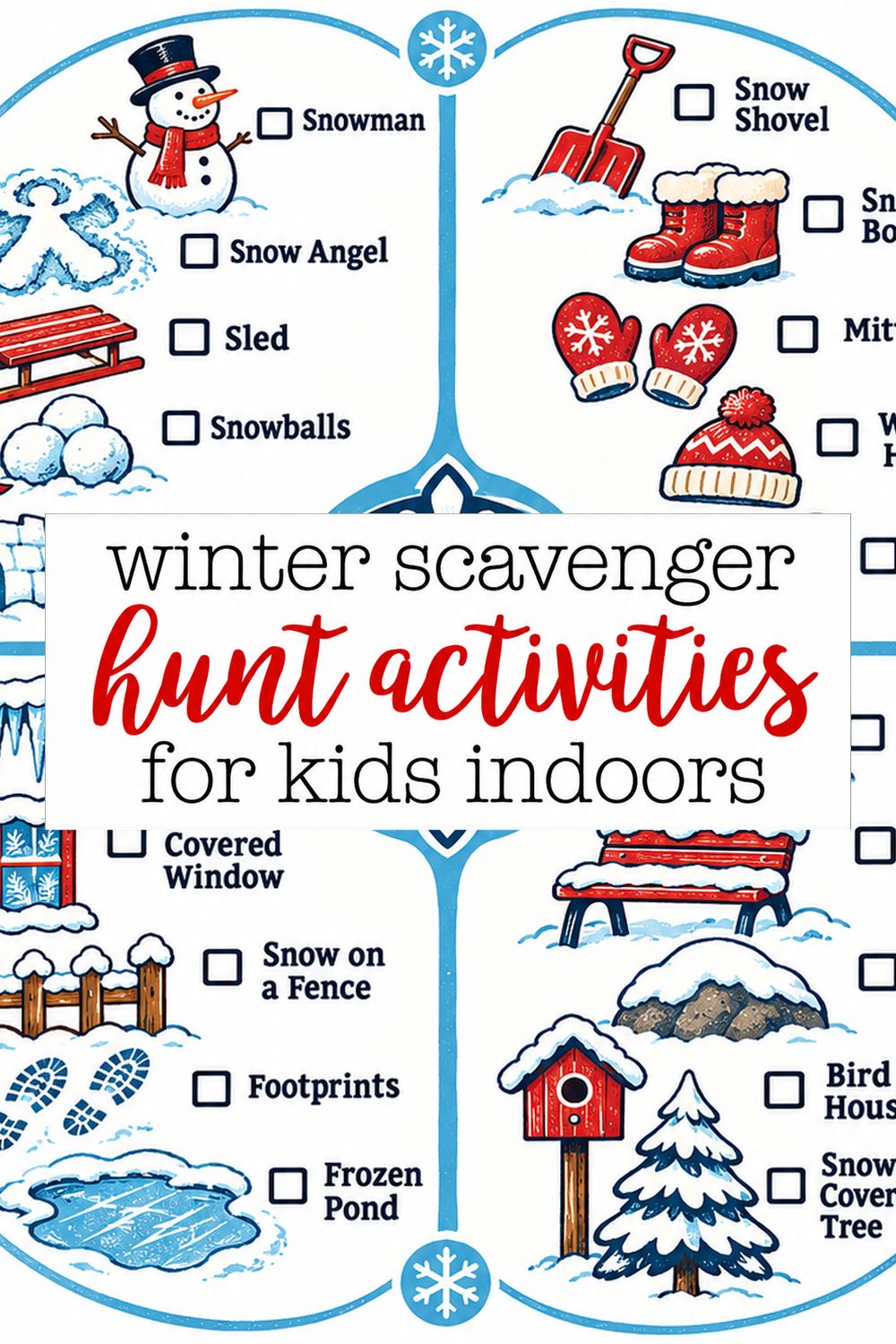
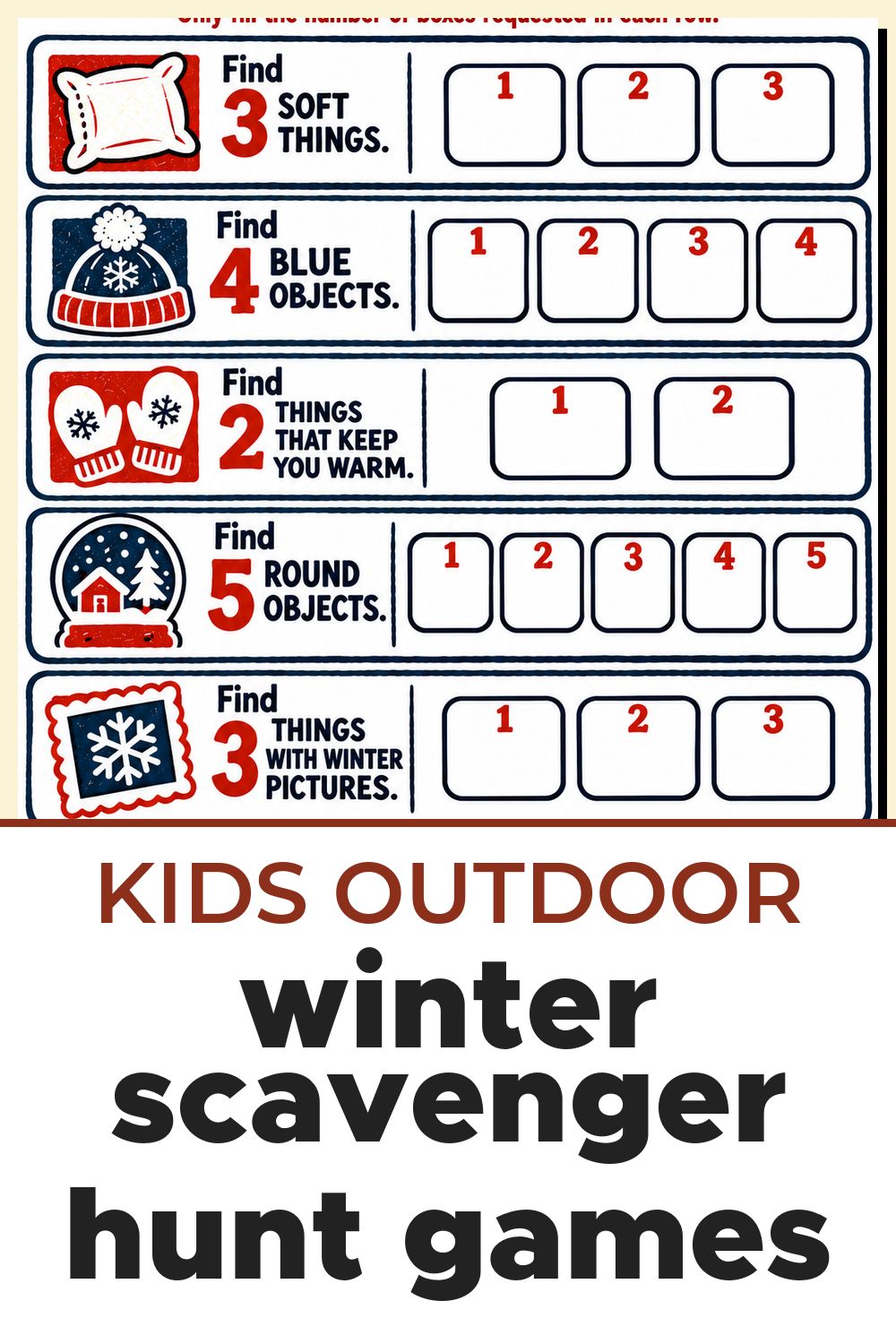
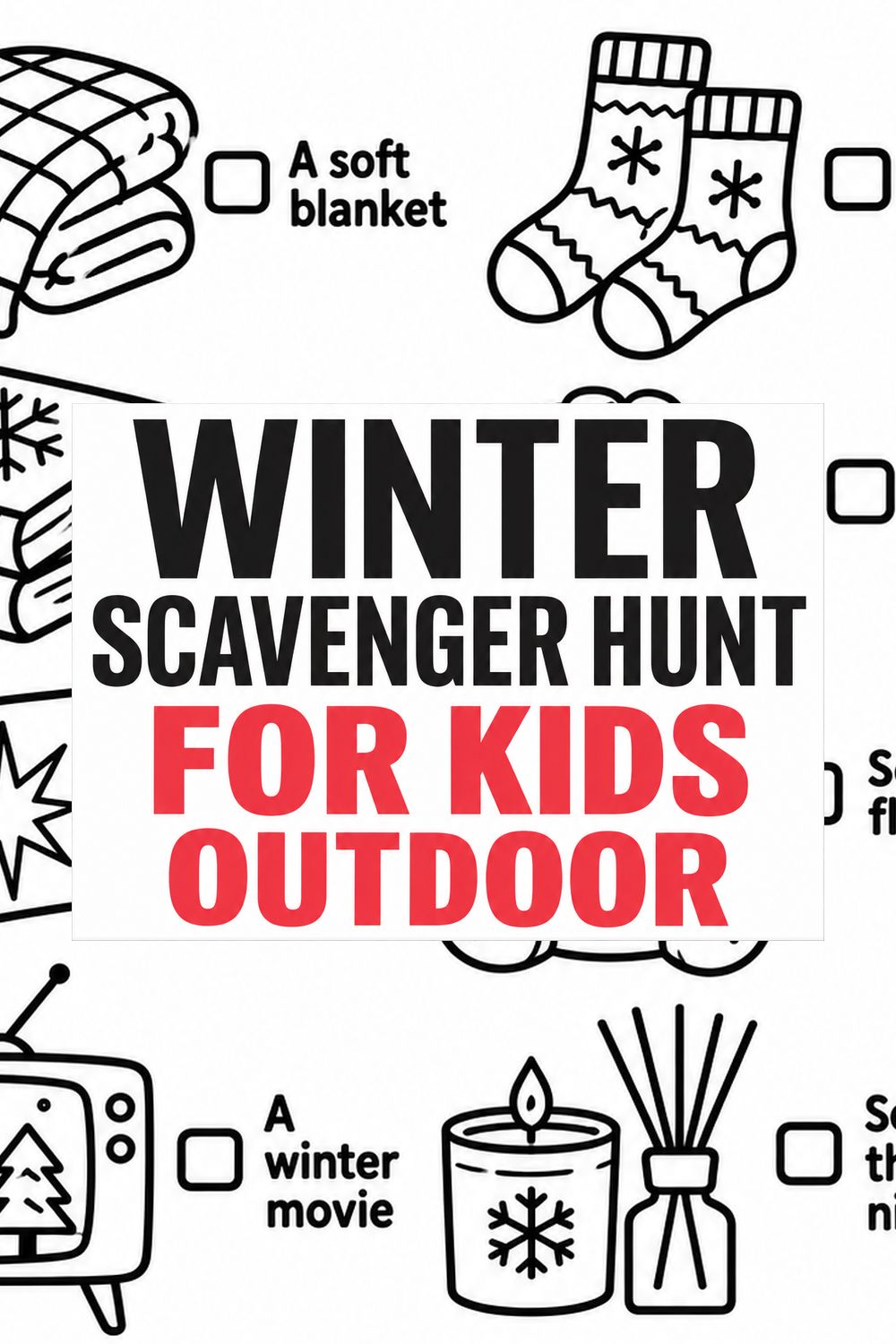
No hiding here. Hand out the list and let kids find winter things that are already in the house: a cozy blanket, mittens, a scarf, fuzzy socks, a winter book, a hot cocoa mug, a snow globe, or something white or blue. They find it, hold it up, cross it off and keep going.
If you want the holiday version with all the decorations, use my Christmas scavenger hunt instead. This carry-the-list hunt stays winter-only, so it still works in February.
Touch and return round
This is the one I pull out when everyone is restless. Each child starts on a spot, like a rug or a taped X. You name or show one to three items, and kids walk to touch each one and get back to their spot within 30 seconds. Walking only, no running. Change the movement each round: tiptoe, shuffle, giant steps. This round gets kids moving fast without turning the living room into a racetrack.
Winter animal match
Show kids one winter animal at a time. They race to find something in the house that matches it, either by color or by the first letter sound of its name. For a polar bear, that could be anything white or anything that starts with P. For a red cardinal, anything red counts. Keep a basket at home base for everything they bring back. When you finish, take a couple of minutes to talk about the animals: where they live and what makes each one different.
How to play outdoors
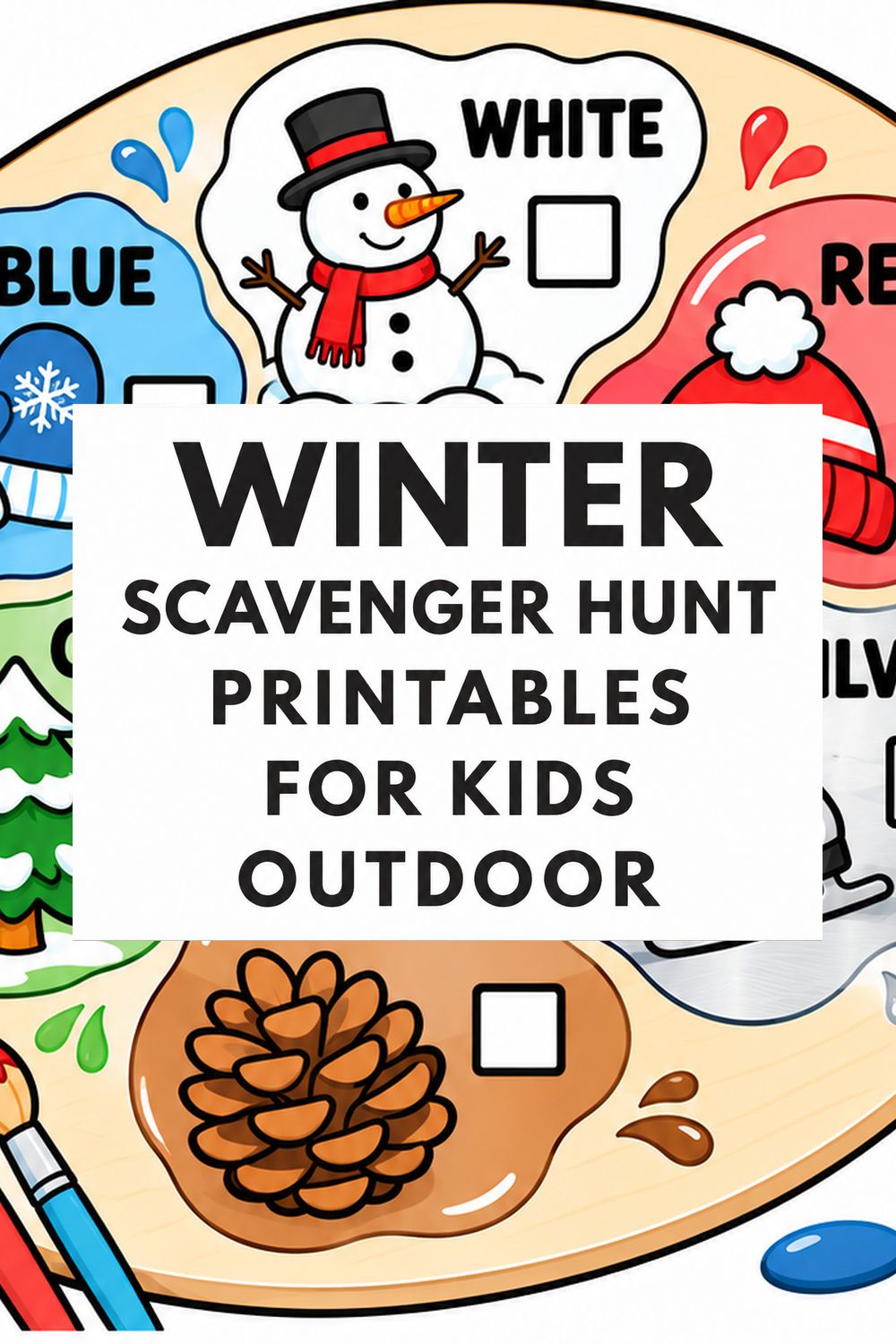
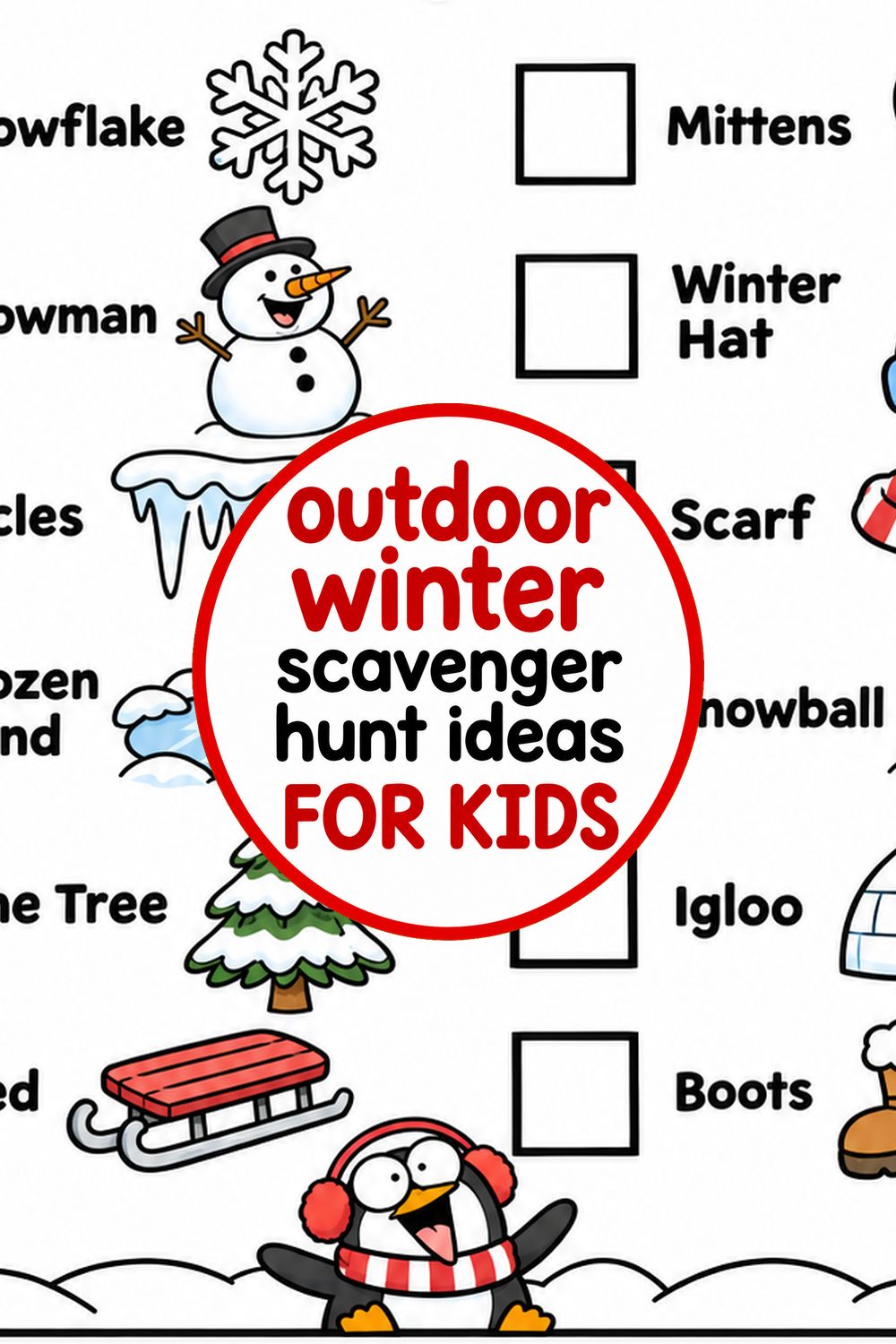
Outside it’s the same checklist idea, just in the yard, at the park or on a walk around the neighborhood. Put the list on a clipboard, read it together before you head out, and cross things off as you go. When you want more than a hunt, the checklist also mixes well with other outdoor yard games.
Yard or neighborhood walk
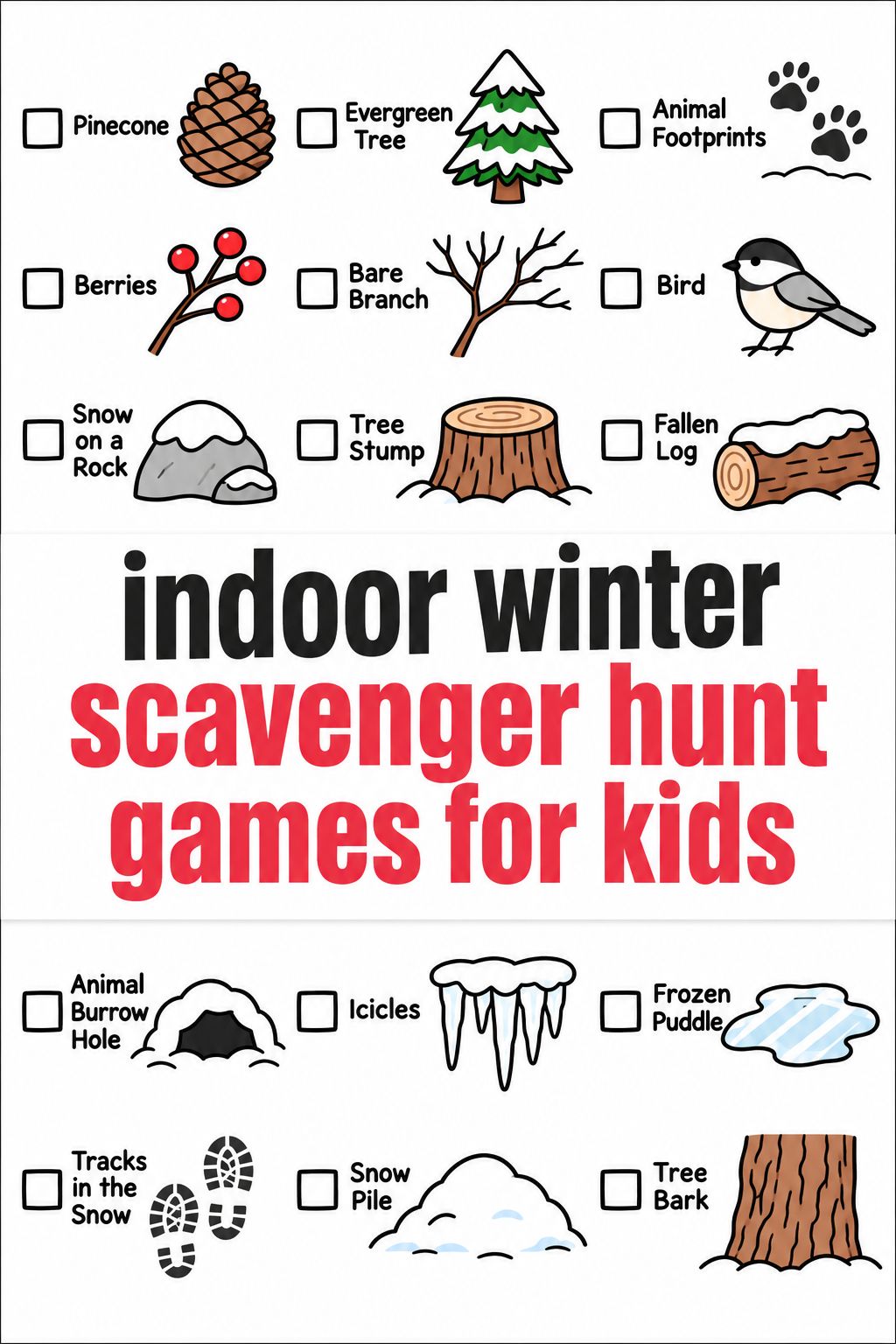
Walk slowly, look around and listen. Good winter finds include animal tracks, pinecones, icicles, frost on leaves, bare trees, evergreens, winter birds and chew marks on bark. Use your ears too: listen for birds, dogs barking, or snow crunching under your boots. You don’t have to find everything on one walk. We almost never do, and it’s fine to pick the list back up tomorrow.
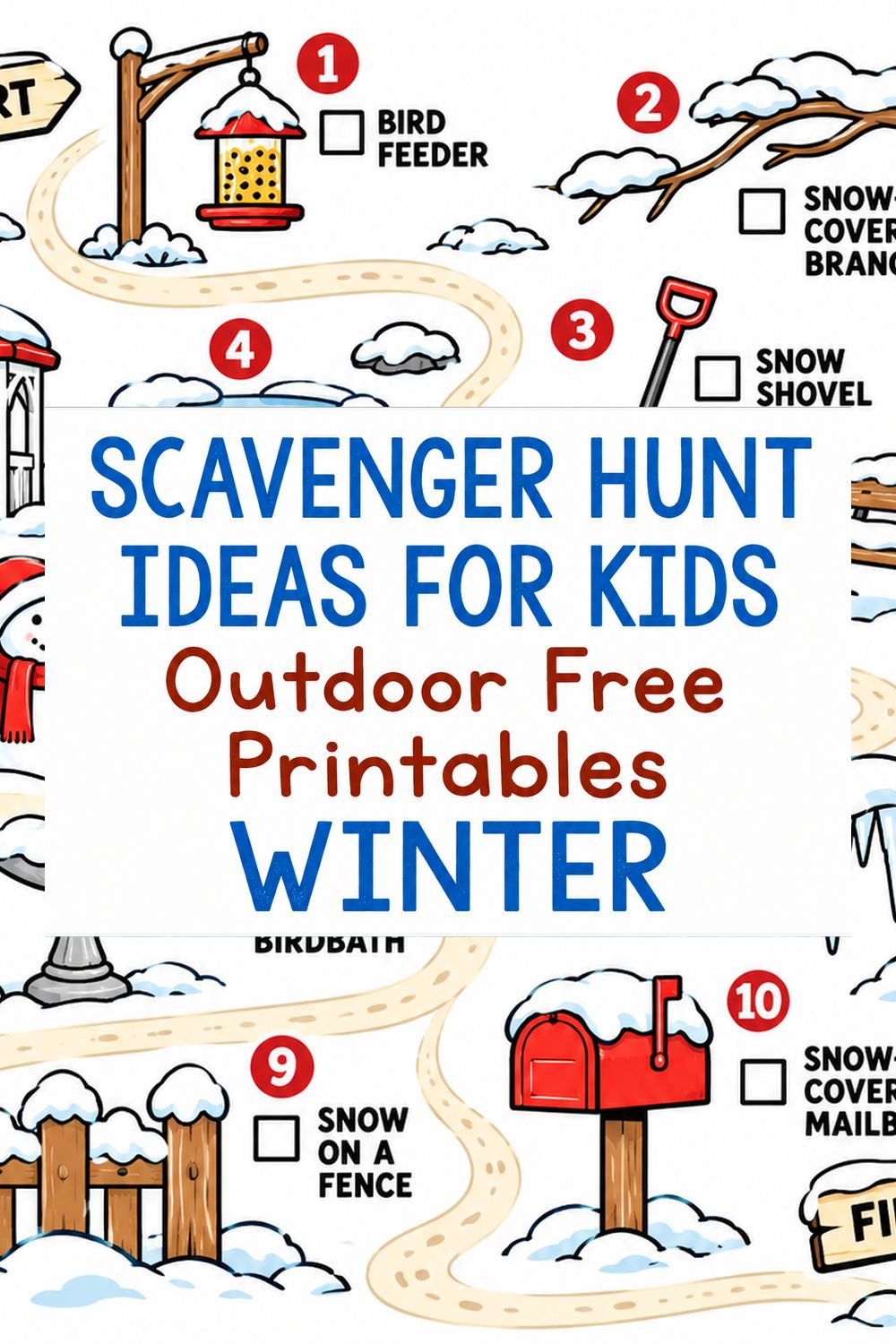
Snow treasure hunt for toddlers
For toddlers who are not ready for a long walk, bury a few water-safe toys in small mounds of snow. Mark each mound with an X, using colored water in a squeeze bottle. Put a small wrapped treat in the last mound. Kids dig out each one. For a 4-year-old, number the mounds and have them dig in order. One family found this snow hunt kept their 3-year-old busy for about 20 minutes.
Window hunt for freezing days
When it’s too cold to stay out for long, do the outdoor hunt from the windows. Stand at a big window and check off what you can see: tracks across the yard, snow on an evergreen, a bird at the feeder, frost on the glass. You get the outdoor list without the cold. On those days we often follow it with these I Spy winter sheets at the table.
Rules and scoring
You don’t need points at all. Pick whatever keeps it fun for your group.
- Simple play: cross items off as you find them and celebrate when the list is done.
- Most items or most valued items: with older kids, decide before you start whether the winner finds the most things or whether harder finds are worth more. That choice changes how they plan their hunt.
- Speed round: set a timer and see who finds the most matches before it goes off.
- Touch-and-return points: 1 point for each item a child touches before getting back to their spot in time.
- Rounds: play a few rounds, and make the last one a no-hints round.
- Prize: optional. One family gives a small chocolate treat at the end, but a high five works too.
If you want more ways to keep the hunt fair between teams, including tie-breakers, my fall scavenger hunt lays them out.
Video examples
This first clip walks through an outdoor winter hunt the way a kids’ science show does it, in sections like weather signs, plants, animal signs and bugs. It ends by inviting kids to make their own hunt to share with a friend.
This next one is an indoor PE hunt. Kids touch as many items from the picture as they can find in the house each round, with a different movement each time. The video has music and no talking, so you just watch how the rounds go.
This last one is a sing-along nature walk hunt. It names squirrels, icicles, footprints, rabbit tracks, pine cones and frost, and has kids listen for crunching snow and wind.
Adapting the hunt for ages and groups
I’ve run this hunt with my own three at home and with my old second through fourth grade classes, and what works changes a lot with age. Little kids need pictures and a short list. Big kids want a challenge and a timer. Here’s how I change it.
Toddlers and pre-readers
Use the picture cards so kids who don’t read yet can play by matching pictures. Read the list out loud together before you start, and let pre-readers draw a color or a squiggle next to each word. On a longer outdoor walk, bring a sled so a tired toddler in a snowsuit can ride when their legs give out.
Older kids
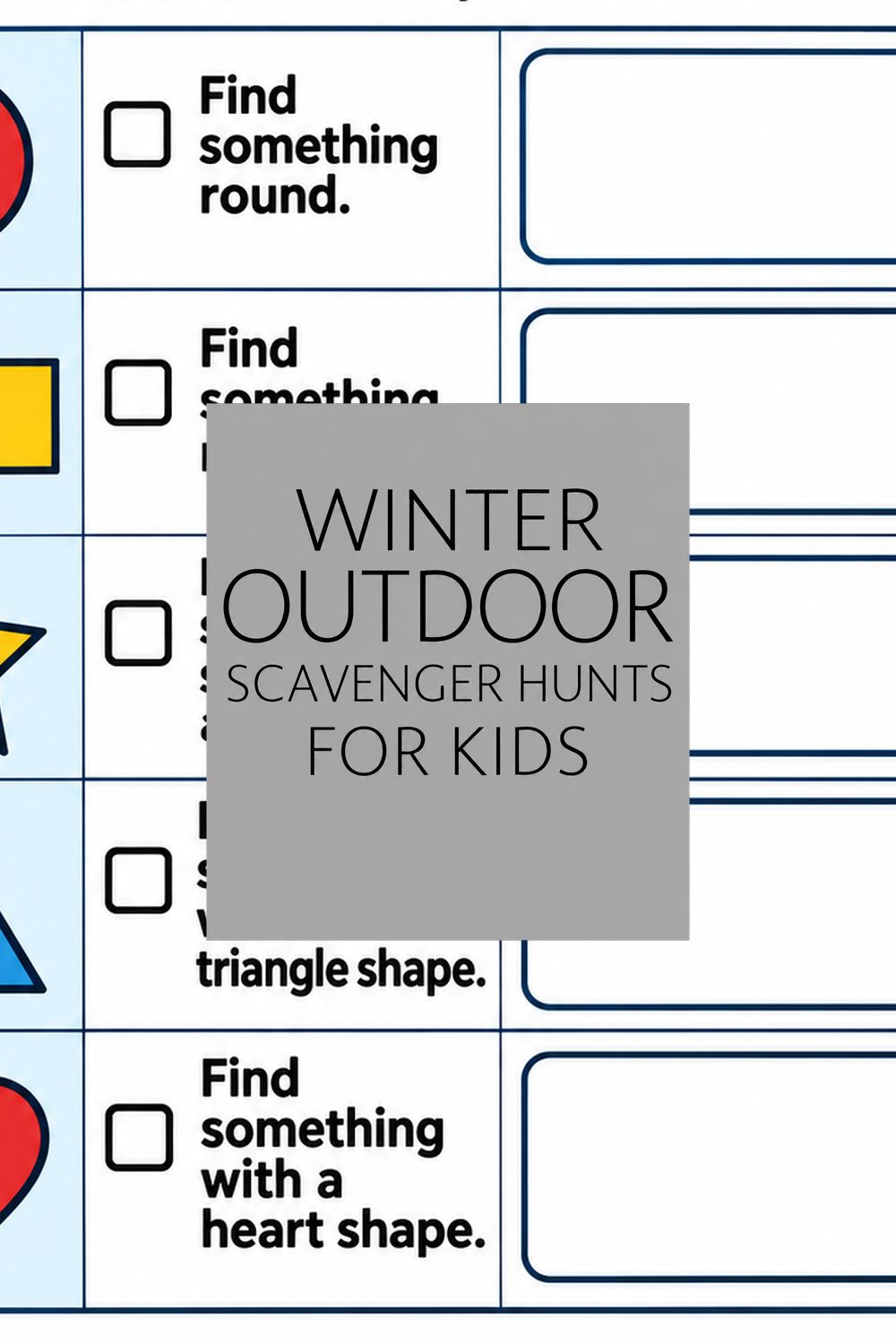
Make the finds harder. Ask them to name two kinds of evergreens, hear a bird call, spot a frozen spider web, or find an old nest in the bare branches. Add a time limit, or try a selfie version where they take a quick photo of each find instead of collecting it. Tweens and teens can also do clue or code word versions of the hunt. Indoors, older kids can even run the whole hunt on their own while you stay nearby.
Mixed-age siblings
Pair an older kid with a younger one. They can hunt as a team, or each one can make a short list for the other. My 11-year-old loves making lists for his 5-year-old brother. The list he got back was one very serious drawing of a pinecone, and he had to go outside and find a real one.
Classroom version
This winter hunt works well with a whole class. Everyone starts on a spot at their desk or on the carpet, and you play the touch and return round together. Some teachers have used this kind of hunt for PE when the weather keeps kids inside. If your class has a wide range of readers, hand out different lists by reading level so everyone can play. I kept baskets at the front for the animal match, and between rounds we named one fact about each animal.
Variations to try
- Snow day action list: add things to do, not just things to find, like make a snow angel, build a snowman, catch snow on your tongue, go sledding, and drink hot cocoa after.
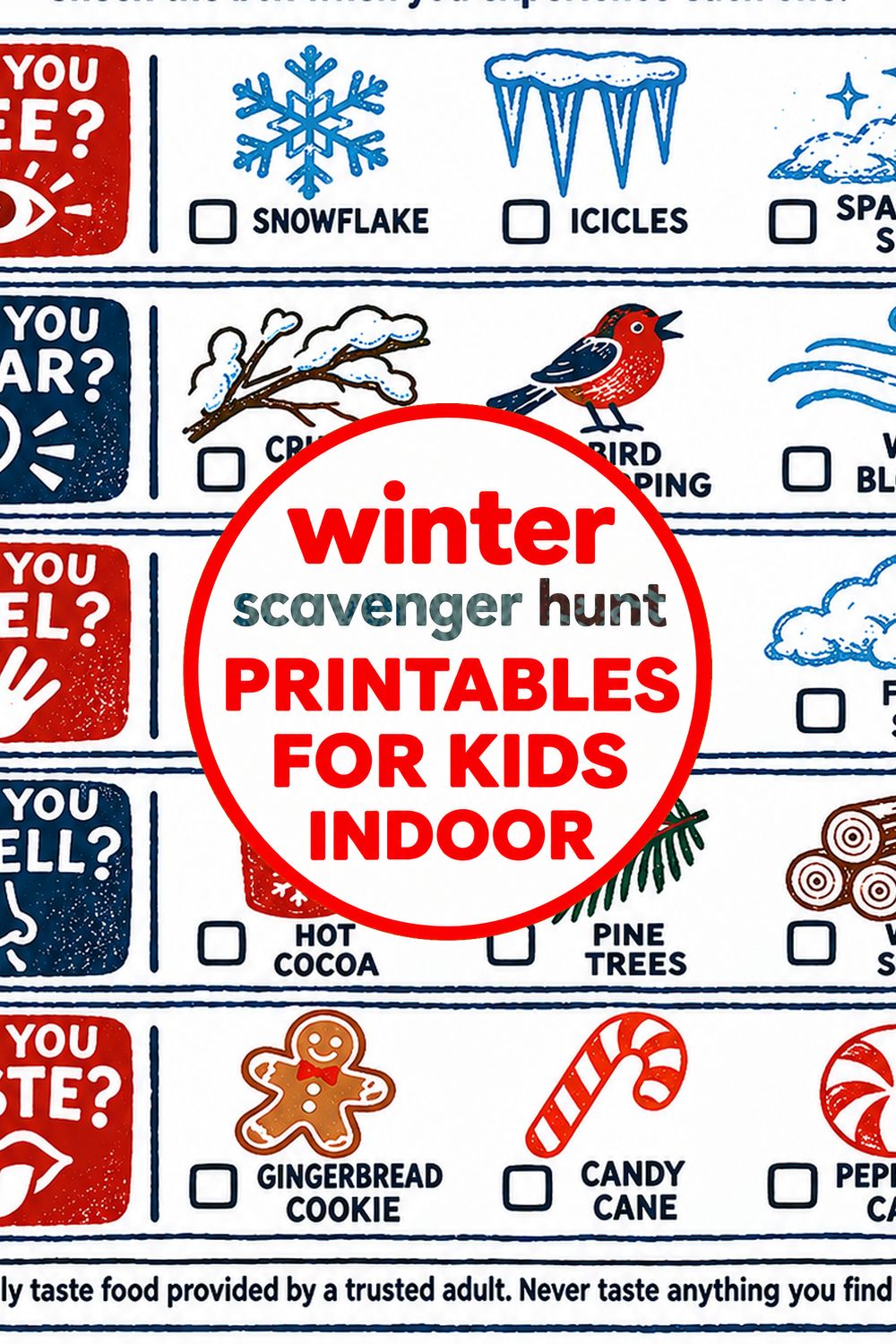
- Sounds and senses hunt: listen for birds, dogs or wind in the trees, feel for crunchy snow, look for tracks.
- Winter movement hunt: add prompts like leap like a hare, waddle like a penguin, follow the footprints in single file, or stand on one leg like an evergreen.
- Color hunt: give kids a list of colors and matching markers. They find an item of each color and check it off with the matching marker.
- Name or letter hunt: hide snowman letters to practice names or first sounds, or play the animal match by letter only.
- Flashlight hunt: dim the room, hand out flashlights and hide the cards for a search in the dark. If you want a whole game around lights out, we also play flashlight tag on winter evenings.
Tips and common mistakes
- If kids find everything fast, the hiding spots were too easy. Hide the cards in harder spots or add a time limit.
- In fresh snow, your own footprints show where you hid things. Walk all over the yard first, or make a few extra trails before you hide.
- Stop before kids get cold and cranky, not after. When mittens get wet or the whining starts, head in for cocoa and call it a win.
- Icicles are for looking at. Don’t break them off or stand under them.
Staying warm and safe outside
I keep the outdoor hunt short when it’s bitter cold. Pediatricians recommend skipping outdoor play when the temperature or wind chill is below -15 F, because exposed skin can freeze within minutes.
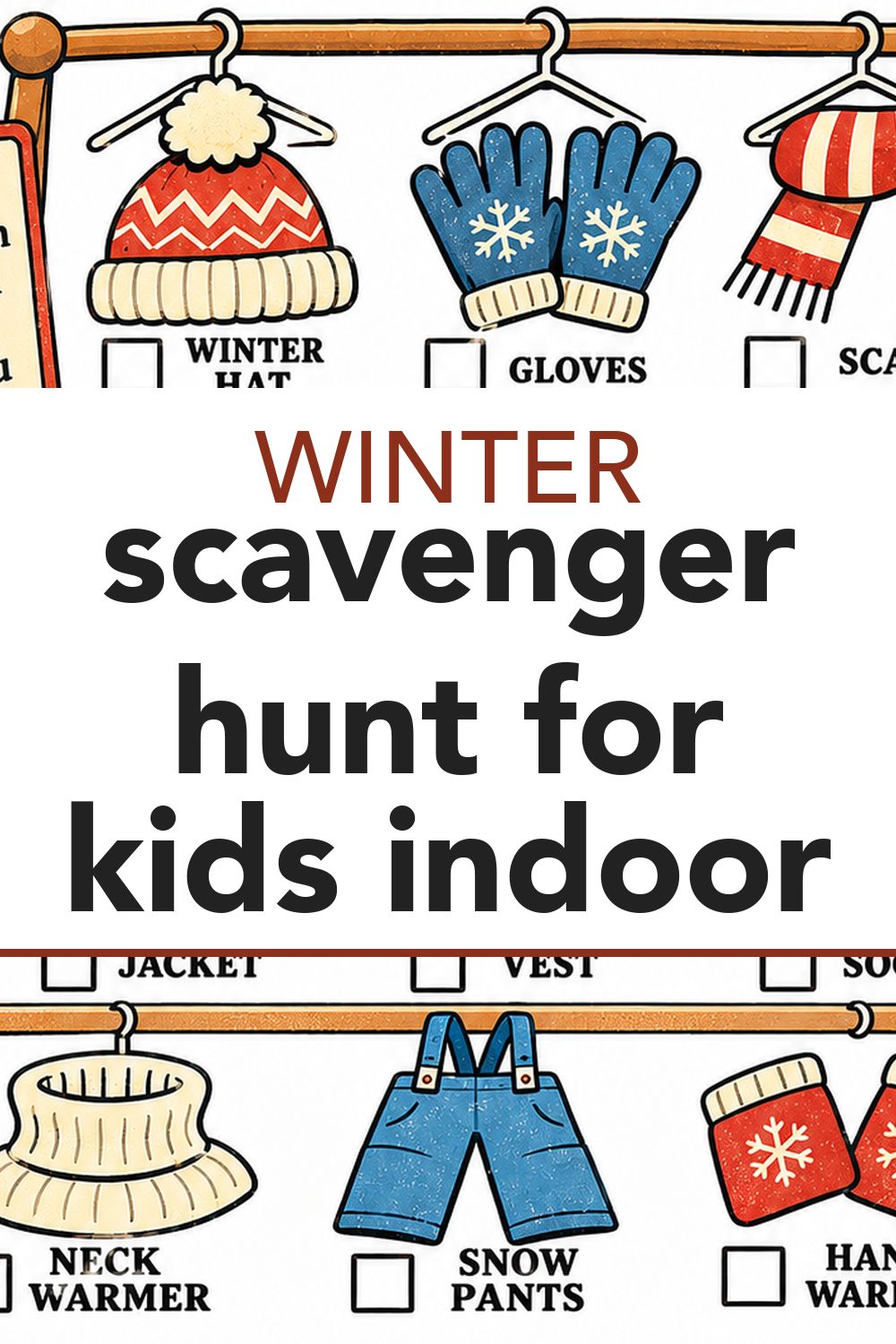
Dress kids in several thin layers, with insulated boots, mittens or gloves, and a hat, and change them out of wet clothes right away. Set a time limit and plan indoor warm-up breaks so kids don’t stay out too long. On very cold days, start with 5 to 10 minutes in the backyard and build up from there. A quick game of tag before you start the list helps everyone warm up.
Fingers, toes, ears and noses are the most likely spots for frostbite. If you think it’s starting, bring your child inside and warm the skin gently. Stay off frozen ponds and streams, and look at them from the bank only.
When you come back in, keep the cozy going with a warm-up game at the table. We usually pull out winter bingo or the winter memory game while the mittens dry by the door.